Of those you mentioned, I actually have tried GMSH and used its GUI to make a 2D grid, the issue was that when I exported the mesh file as a .mesh file, something weird would happen to the original mesh’s edges that I don’t know how to explain. I’ll try to give the others a try.
And to your comment on my use case, this was just a test grid to see how custom points were handled in mesh creation in fenics. What I created was meant to look similar to the r-theta plane of a subregion of the full grid that I’m using for my original problem. The original file I’m using contains meteorological data, and in meteorology, data is gridded in spherical coordinates (the Earth), except with pressure being the vertical coordinate instead of r, however r-coordinate data is also provided for each data if it’s needed. If you go back and take another look at the second plot I posted, each one of those dashed lines is analogous to a layer of constant pressure from the ground to the tropopause, and you can see that the heights of each layer varies vertically in a sort of wavy fashion which is pretty close to how it typically looks in real life.
The actual problem that I intended to work on once I figured out grid creation, was to use a subregion of one of the pressure layers on the phi-theta plane (which would look something like the following below)
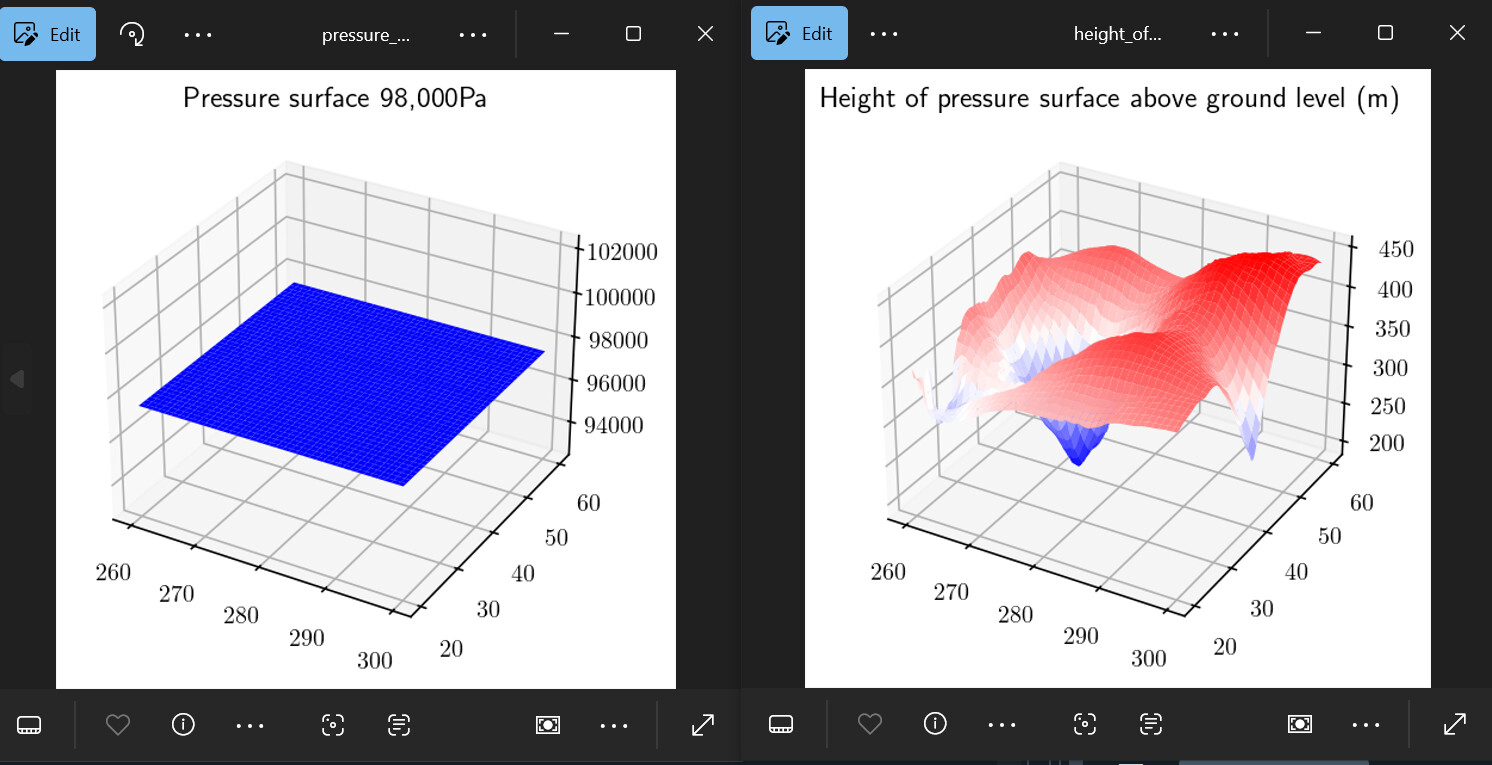
to solve Poisson’s Equation on. Is Fenics able to solve PDEs on a mesh like this?